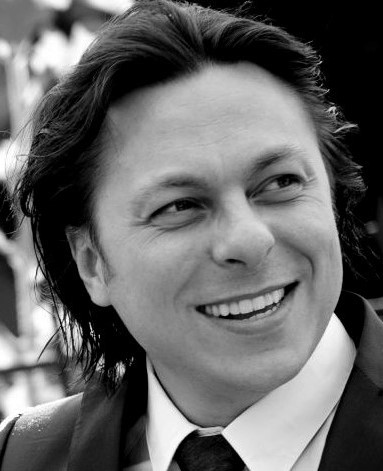
@Marco
I work at the intersection of autonomous systems, knowledge and information behaviour, and business processes, with the human firmly at the centre.
At seven, I took apart my first electronic device to see how it worked. The instinct never left. I spent twenty-five years building engineering teams across countries and wrote a dissertation on the value that lives between people. Now software is becoming an actor, not a tool. And I am trying to find out, in two ventures and in writing, what happens to that value when machines mediate the work that holds organisations together.
The work
I have never paid much attention to company names or the titles assigned to me. The path went from HR consulting in the nineties to movie production, then high-tech R&D and CTO positions across regulated and non-regulated industries, then back to consulting: fractional CTO, head of engineering, strategic advisor. There is no tidy progression. I followed whatever I was in love with at the time, and the titles followed me, not the other way around.
Along the way I launched seventy-two digital products. Some got replaced. Some are still in use after ten years. Some got improved and transformed in line with how their industries changed. You have probably used a few of them, or still are. The number that matters to me is not seventy-two. It is the number of times something failed and I learned why, or something succeeded and I learned not to assume it would again.
The thing I care about most is simpler than any of it. Every person I have worked with over thirty years is still willing to work with me again. That has mattered more to my career than anything I have built.
The domains
Most of my career has run through regulated industries (healthcare, biotech, supply chain R&D, financial services) where data governance, privacy, and compliance are not features you add later but the core architectural problem. I have designed hospital networks connecting eighteen facilities with a total reach of four million patients a year, built AI pipelines for drug screening in malaria research, and scaled platforms to eighty thousand concurrent users in environments where a single compliance failure is not an acceptable trade-off. I have also worked across media, agriculture, and mobility, usually brought in to figure out what the technology strategy should actually be before anyone starts building.
What I studied
I have a bachelor's in business administration, an executive MBA from the Polytechnic of Milan focused on digital transformation, and a postgraduate program in AI and machine learning from Caltech. I hold a financial modelling and valuation analysis certification, along with Prince2, COBIT, ITIL, and the usual project management credentials. I am currently pursuing a degree in biology with a specialisation in bioengineering and neuroscience, because the gap between what I know about systems and what I do not yet know about the biological ones is bothering me in the same way the gap between technology and people did ten years ago. I have one peer-reviewed publication, on machine learning for phenotypic imaging in malaria research, indexed on PubMed.
What I am building
Hypervolume
Infrastructure for cross-boundary transactions (operational, commercial, financial, compliance) between organisations, systems, and increasingly between autonomous agents. Cryptography, selective disclosure, and verifiable trust where no single party controls the data. And no, it is not blockchain!
Swarmix
Your agents need structure, not freedom. Governance, memory, and coordination for AI agents that work together across repositories while humans keep decision authority.
A few personal notes
I was born in Italy, lived in Britain for twenty-one years, spent two in Norway - back and forth, and have been in Switzerland for three. The longer I stay anywhere the harder it becomes to give a tidy answer to where I am from.
I read more than is good for me, mostly things outside my own field. I have a soft spot for cosmology and for the older branches of philosophy of science, and a less defensible soft spot for spiking neural networks, which I keep meaning to do something serious with and have not yet. I am skeptical of most management advice and most thought leadership, including, on bad days, some of my own.
Get in touch
I am open to advisory work, fractional CTO engagements, speaking, and conversations with people working on problems that overlap with the ones I care about. If something on this page resonated, the easiest way to reach me is through LinkedIn.
For the longer version: the journey.